Rapid local response
St. Petersburg water damage pros answer around the clock and send a crew as soon as the call is taken.
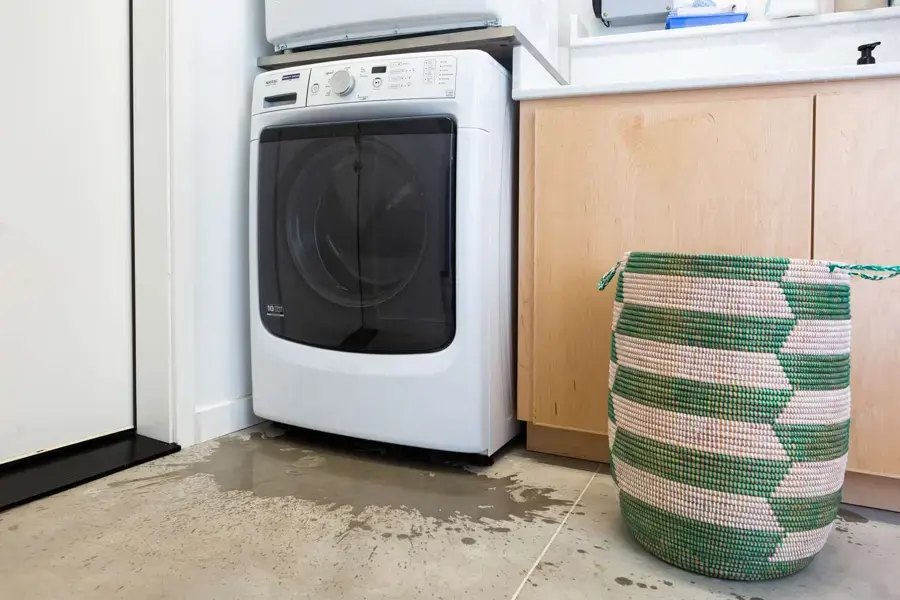
Appliance lines fail quietly: a washer hose bursts, a dishwasher fitting weeps, an ice-maker line cracks behind the fridge. The water runs under cabinets and flooring until someone notices.
(888) 621-2041Get emergency water extraction started for a St. Pete appliance leakShut the valve behind the washer, under the sink or behind the fridge, or the main.
Only if the outlet and floor around it are dry.
Empty the sink base and lower cabinets so air can reach them.
Show where the water ran, then get it extracted.
Third-party restoration contractors do the work; this is how a proper job runs, so you know what to expect and what to ask for.
St. Petersburg water damage pros answer around the clock and send a crew as soon as the call is taken.
The drying team maps moisture first, then extracts and dries until the readings say dry.
Daily moisture readings and timestamped photos before demolition, the file an adjuster asks for.
Surge, downpours, slab leaks and AC overflows are everyday calls in a Florida slab home.
In Saint Petersburg, FL, appliance leak cleanup typically runs $800 to $4,500, depending on whether the water is clean or gray, how far it ran under cabinets and flooring, and whether flooring has to be lifted.
For a closer planning number, try the water damage cost calculator. A firm figure only comes from an on-site walkthrough of what is actually wet.
The tech who does the walkthrough finds the source and maps how far the water traveled, using thermal imaging and pinless meters.
The extraction crew pulls standing water with truck-mounted units, then removes anything the water category says cannot be saved.
Air movers and LGR dehumidifiers go in sized to the evaporation load of each room, with desiccants for dense Class 4 materials.
Readings are logged daily, and equipment leaves only when wet materials are within 2 to 4 points of a dry reference material.
Appliance leaks are among the most common water losses in St. Petersburg homes and condos, and they are easy to underestimate. The appliance hides the source, and the water runs under the toe kick of the cabinets, under the flooring and into the base of the wall before it shows at the edge of the room.
A washer hose is fed by the house supply, so a burst hose keeps running until the valve is closed. A dishwasher drain leak, on the other hand, is gray water and counts as Category 2. The extraction crew removes standing water, then the tech who does the walkthrough maps the wet area with meters and a thermal camera, checking under cabinets and along the walls. Toe kicks are often removed so air can be pushed under the cabinets, and holes drilled in the cabinet base let the drying team dry the cavity without pulling the cabinets. Floating floors that trapped water usually have to be lifted.
In condos, an appliance leak often reaches the unit below; see condo and unit-to-unit leaks. For supply lines inside walls, see burst pipe cleanup.
Braided stainless washer hoses and an automatic shutoff or leak sensor behind the washer and fridge prevent many of these calls. Hoses are worth replacing every few years.
The EPA WaterSense program has leak-checking tips at epa.gov, and the University of Florida extension publishes home water guides at edis.ifas.ufl.edu.
Water under the cabinets? The part you cannot see is the part that swells.
Get the St. Pete kitchen drying started todayFrom the downtown waterfront to Pinellas Point, the St. Petersburg water damage pros take calls from every ZIP on the peninsula, day and night.
The local restoration pros cover all of St. Petersburg, from Snell Isle and the Old Northeast to Lakewood Estates, Tyrone and Gateway, plus Gulfport, South Pasadena, Pinellas Park and the beach towns.
The restoration team asks for the cross street and which rooms are wet, because that decides how much equipment goes on the truck.
See every St. Pete neighborhood and ZIP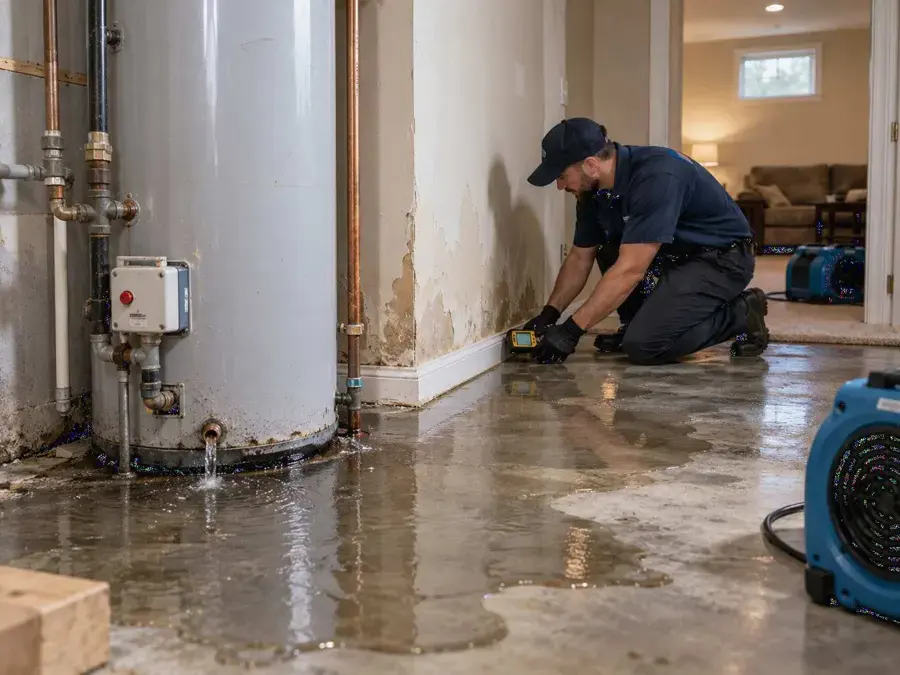 Water Heater Failure CleanupTank failures in garages and closets, dried before baseboards swell.Read the water heater failure cleanup guide
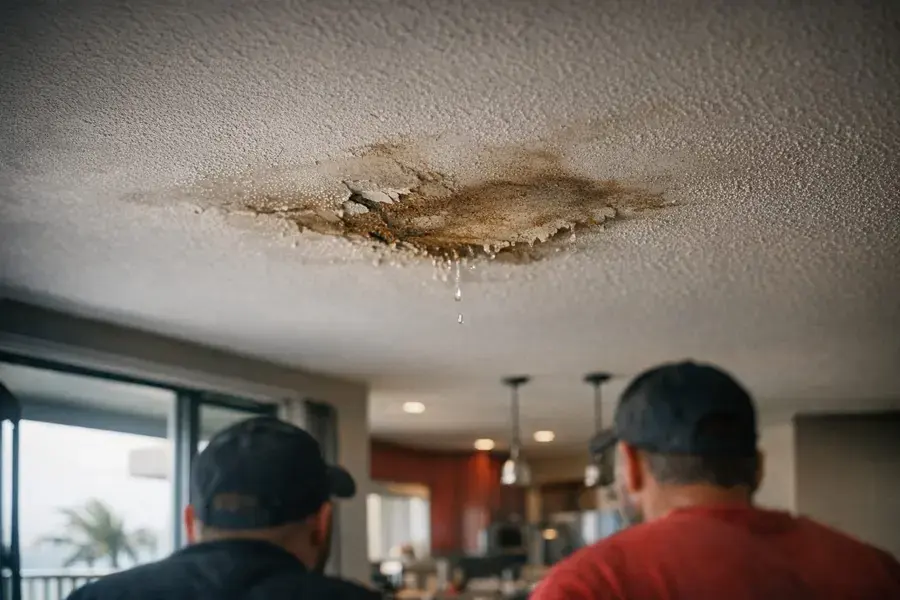 Condo and Unit-to-Unit Leak CleanupOne leak, several units, mapped floor by floor.Read the condo guide
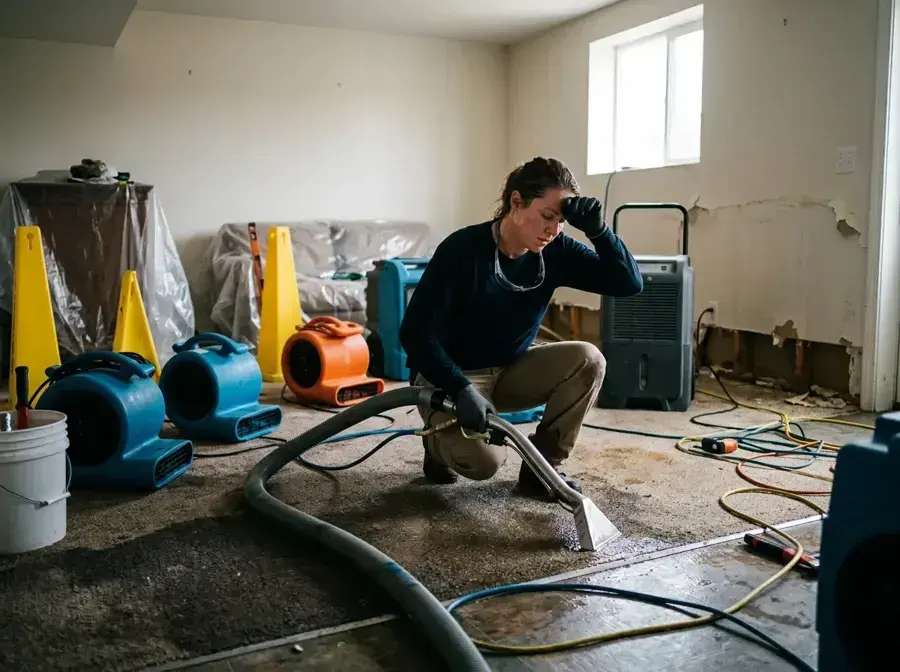 Water Extraction and RemovalTruck-mounted extraction pulls standing water before it wicks into walls.Read the water extraction guide
Often not. Removing toe kicks and drilling small holes in the cabinet base lets dry air in. Particleboard cabinet bases that swelled may need replacing.
A burst fill hose is clean supply water. Water from the drain hose or an overflowing tub is gray water, Category 2, and is handled with more caution.
A sudden hose or line failure is often covered after the deductible, while slow leaks may not be. Coverage depends on your policy, so it is worth checking with your own insurer.
Usually about 3 to 5 days with air directed under the cabinets and dehumidifiers running.
Fans move surface air but do not reach under cabinets or flooring, and they do not remove humidity. Leftover moisture is what causes swelling and odor.
Cupping planks, soft spots, dark grout and a musty smell are clues. A moisture meter gives a clear answer.
Still have water on the floor? Skip the reading and call (888) 621-2041.
The drying team answers 24/7 and checks every cabinet base and wall the water could have reached.