Rapid local response
St. Petersburg water damage pros answer around the clock and send a crew as soon as the call is taken.
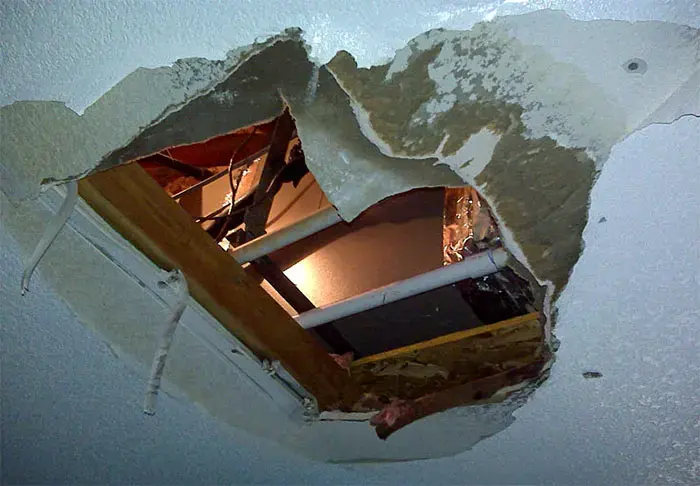
A stain, a bulge or a steady drip from the ceiling means water is sitting above the drywall. Finding the source and drying the space above it keeps a small leak from becoming a collapse.
(888) 621-2041Get a local pro on the line for St. Pete ceiling leaksA sagging ceiling can drop without warning; clear the room below.
Close the fixture valve or the main, and switch off the AC if the leak is near the air handler.
Switch off the circuit for any light or fan near the wet spot.
Buckets and towels below, photos of the stain, then call.
Third-party restoration contractors do the work; this is how a proper job runs, so you know what to expect and what to ask for.
St. Petersburg water damage pros answer around the clock and send a crew as soon as the call is taken.
The drying team maps moisture first, then extracts and dries until the readings say dry.
Daily moisture readings and timestamped photos before demolition, the file an adjuster asks for.
Surge, downpours, slab leaks and AC overflows are everyday calls in a Florida slab home.
In Saint Petersburg, FL, ceiling leak water damage typically runs $800 to $5,500 to dry, depending on the size of the wet area above the drywall, whether the ceiling has to be removed and how far water ran into the walls below.
For a closer planning number, try the water damage cost calculator. A firm figure only comes from an on-site walkthrough of what is actually wet.
The tech who does the walkthrough finds the source and maps how far the water traveled, using thermal imaging and pinless meters.
The extraction crew pulls standing water with truck-mounted units, then removes anything the water category says cannot be saved.
Air movers and LGR dehumidifiers go in sized to the evaporation load of each room, with desiccants for dense Class 4 materials.
Readings are logged daily, and equipment leaves only when wet materials are within 2 to 4 points of a dry reference material.
Interior ceiling leaks in St. Petersburg usually come from one of three places: a bathroom or plumbing line above, an air handler and its condensate drain in the attic, or a unit upstairs in a condo or two-story home. The stain on the ceiling is only the part that shows. Water spreads across the top of the drywall and along joists, often well past the visible mark.
The tech who does the walkthrough uses a thermal camera and moisture meters to trace the wet area above the ceiling, which is often larger than the stain. Drywall that sags, crumbles or held pooled water is removed for safety. Damp but sound drywall can often be dried in place by opening a small access hole and directing air movers and dehumidifiers into the cavity. The drying team also checks the walls below the leak path, because water follows studs down.
If the source is an AC unit, see AC drain line leaks. After a hurricane, roof leaks follow a different path; see hurricane roof leak damage.
Many St. Pete homes built before the 1980s have textured popcorn ceilings, some containing asbestos. Before a wet popcorn ceiling is disturbed, a restoration company in St. Petersburg typically has it tested.
Water and ceiling light fixtures are a real electrical hazard. The Occupational Safety and Health Administration covers electrical and structural hazards during water cleanup at osha.gov, and Ready.gov lists basic safety steps.
Water dripping through the ceiling right now? Clear the room below and call.
Call the St. Pete ceiling leak line nowFrom the downtown waterfront to Pinellas Point, the St. Petersburg water damage pros take calls from every ZIP on the peninsula, day and night.
The local restoration pros cover all of St. Petersburg, from Snell Isle and the Old Northeast to Lakewood Estates, Tyrone and Gateway, plus Gulfport, South Pasadena, Pinellas Park and the beach towns.
The restoration team asks for the cross street and which rooms are wet, because that decides how much equipment goes on the truck.
See every St. Pete neighborhood and ZIP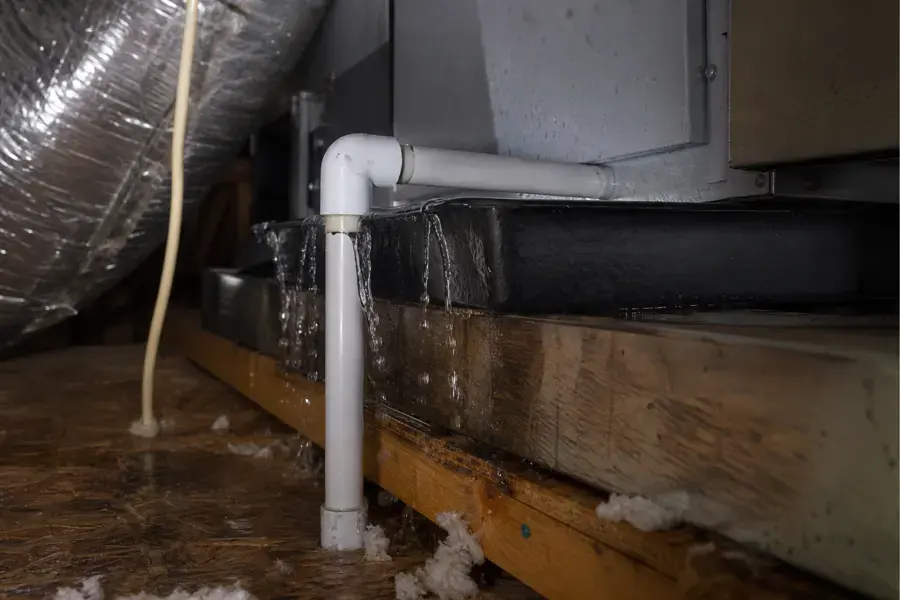 AC Drain Line Leak Water DamageClogged condensate lines overflowing attic and closet air handlers.Read the ac drain line leak water damage guide
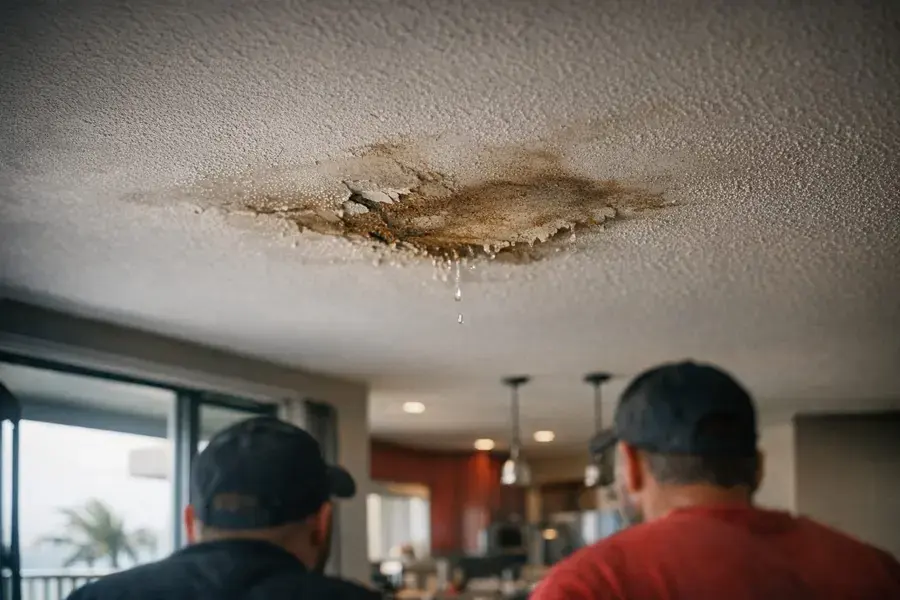 Condo and Unit-to-Unit Leak CleanupOne leak, several units, mapped floor by floor.Read the condo guide
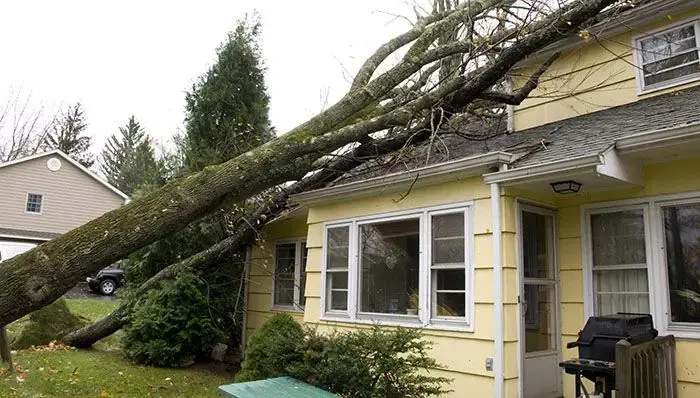 Hurricane Roof Leak Water DamageWind-driven rain in attics and ceilings, traced and dried.Read the hurricane roof leak water damage guide
A bulge full of water can fall. If it is safe to reach from the side, a small hole into a bucket relieves the weight, but clearing the room and calling is the safer move.
If the drywall is firm and the leak was clean water, often yes. Sagging or crumbling drywall is removed and replaced after the framing dries.
It can if the drywall is still wet or the stain is not sealed with a stain-blocking primer. Drying to verified readings comes first.
Sudden leaks from plumbing or an appliance above are often covered, while long-term slow leaks may not be. Coverage depends on your policy, so it is worth checking with your own insurer.
A contained ceiling leak often dries in about 3 to 5 days once air is directed into the cavity. Wet insulation above can add time.
Document it, notify the association and the upstairs owner, and have the moisture mapped in your unit. See the condo leak page for how unit-to-unit leaks are handled.
Still have water on the floor? Skip the reading and call (888) 621-2041.
The restoration team asks where the leak sits and what is above it, then sets up the moisture check.